
There are so many paths within the larger path that we call Yoga, such as Gyana Yoga, Bhakti Yoga, Hatha Yoga etc etc. Also in this blog we include Tantra (re-defined in the modern world as Yoga practised as part of everyday life), and Advaita (non-dualism) which share the same roots.
Within Yoga Tantra and Advaita there is a common terminology, and common concepts and paradigms. The posts below contain content which touches on these concepts and paradigms and in which Swami Nishchalananda explains and de-mystifies them.
Select a post from the list below to read or listen
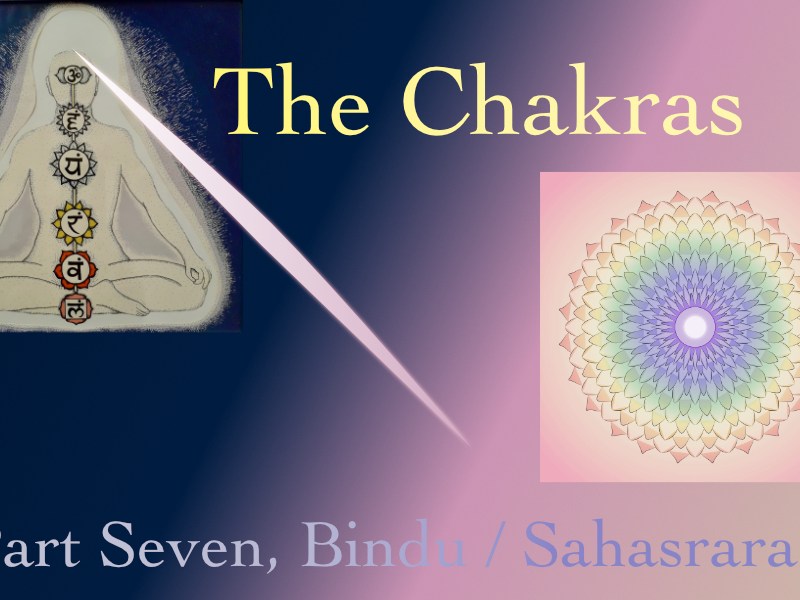
Bindu and Sahasrara
Recordings series compiled from a recent online course. This recording is an introduction and a guided reflection to Bindu and Sahasrara. The text books, especially those written by Swami Nishchalananda (see ‘Books’ in the header menu),…
Keep reading
Agya Chakra
Recordings series compiled from a recent online course. This recording is an introduction and a guided reflection to Agya Chakra. The text books, especially those written by Swami Nishchalananda (see ‘Books’ in the header menu), give…
Keep reading
Vishuddhi Chakra
Recordings series compiled from a recent online course. This recording is an introduction and a guided reflection to Vishuddhi Chakra. The text books, especially those written by Swami Nishchalananda (see ‘Books’ in the header menu), give…
Keep reading
Anahata Chakra: part 2
When the mind is still then automatically the Heart is lucid. Thinking takes us away from the moment, thinking takes us into the past or future whereas the Heart brings you into the present moment. That…
Keep reading
Anahata Chakra: part 1
Within the realm of Anahata chakra, ‘…there is this sense of being in the moment, and flowing with all the ups and downs of life, and this is Surrender.’
Keep reading
Manipura Chakra
Recordings compiled from a recent online course, and including content from the archives; the Chakra course at Mandala Yoga ashram in 2002. This recording is an introduction and a guided reflection to Manipura Chakra. The text…
Keep reading
Swadhishthana Chakra
Recordings compiled from a recent online course, and including content from the archives; the Chakra course at Mandala Yoga ashram in 2002. This recording is an introduction and a guided reflection to Swadhishthana Chakra. The text…
Keep reading
Mooladhara Chakra
Recordings compiled from a recent online course, and including content from the archives; the Chakra course at Mandala Yoga ashram in 2002. This recording is an introduction and a guided reflection to Mooladhara Chakra. The text…
Keep reading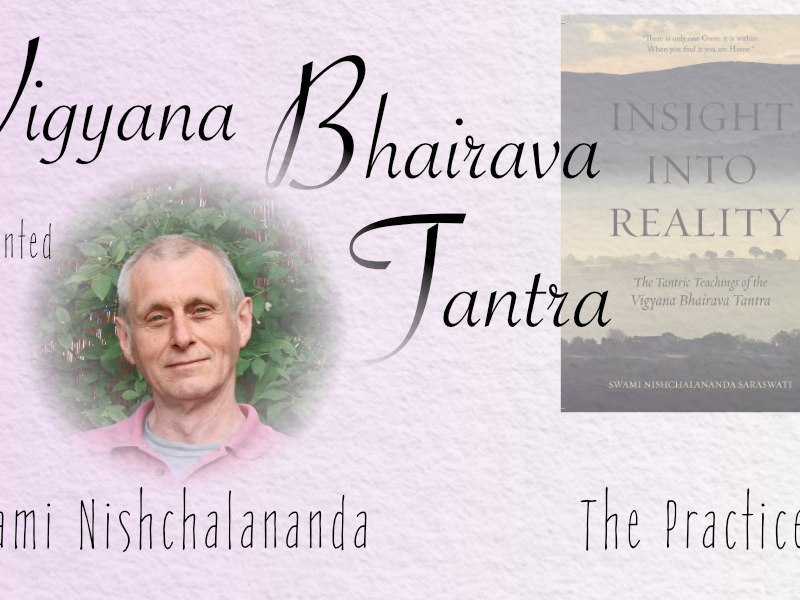
Vigyana Bhairava Tantra – The Practices
As the editor of this blog, I’ve gone through all the archived recordings of Swamiji’s teachings on the Vigyana Bhairava Tantra from around 20 years ago. In terms of audio clarity and the breadth of content,…
Keep reading
Vigyana Bhairava Tantra – Introduction
A series of recordings on the Kashmir Shaivism text ‘Vigyana Bhairava Tantra’, taken from a series of talks and practical lessons given by Swami Nishchalananda from 2002 through to the present time. To start the series,…
Keep reading
The Vigyana Bhairava Tantra in context.
A series of recordings taken from some of Swami Nishchalananda’s discourses on the Vigyana Bhairava Tantra, will be coming to the blog very soon. We decided it would be useful to explain a bit about how…
Keep reading
South Asia Centre, Bengaluru (Bangalore) Part Three
The final part of the question and answer session from the South Asia Centre, Bengaluru, given by Swami Nishchalananda in 2002. Consider Yoga, or any system which can draw us back to a more sensible, reasonable,…
Keep reading
South Asia Centre, Bengaluru (Bangalore) Part Two
Continuing the Question and answer session from the south Asia centre Bangalore in 2002. This is an enjoyable and lighthearted session driven by questions from the listeners and is a chance to hear from Swamiji about…
Keep reading
A Talk given at the South Asia Centre, Bengaluru (Bangalore)
Swami Nishchalananda was invited as a guest speaker to an audience of local people and overseas visitors. Driven by questions he gives a clear description of the basics of Yoga, and studying the subject. This is…
Keep reading
A discussion around Kundalini Yoga, and Yoga Nidra
Sixth in the series of Question and Answer sessions, this one on the topics of ‘The practice of Kundalini Yoga’, ‘Requirements for teaching Yoga Nidra’, and asking Swamiji’s viewpoint on how to understand the state of…
Keep reading
The Shining Mirror of Consciousness
A post by Michael McCann (Spandan). In his Mathnavi, Jalal-al-Din Rumi offers this allegorical reflection on two distinct paths to spiritual fulfilment. ‘There arose a contention between the Greeks and the Chinese in the art of…
Keep readingSomething went wrong. Please refresh the page and/or try again.
 Swami Nishchalananda