
Meditation is a state of being. It’s not something we ‘do’. But there are ways in which we can become more open to the arising of this natural state of Being. Swami Nishchalananda has defined Meditation as ‘Identifying with the self-evident fact that you are conscious, rather than identifying with the things you are conscious of; that is, the sensory impressions and the mental-emotional patterns.’ And there are so many everyday life situations which give us the possibility of entering the Meditative state.
For example, the practices of the Vigyana Bhairava Tantra, a text from Kashmir Shaivism, describes many practices where the recognition of the underlying Consciousness can be present in the simple things of life. More ‘formally’, Patanjali in his ‘Yoga Sutras’ gives a list of six stages preceding the state of ‘Dhyana’ or Meditation, from moral or behavioural patterns through to practices of sense withdrawal (Pratyahara) and one-pointed focus (Dharana).
Select a post from the list below to read or listen
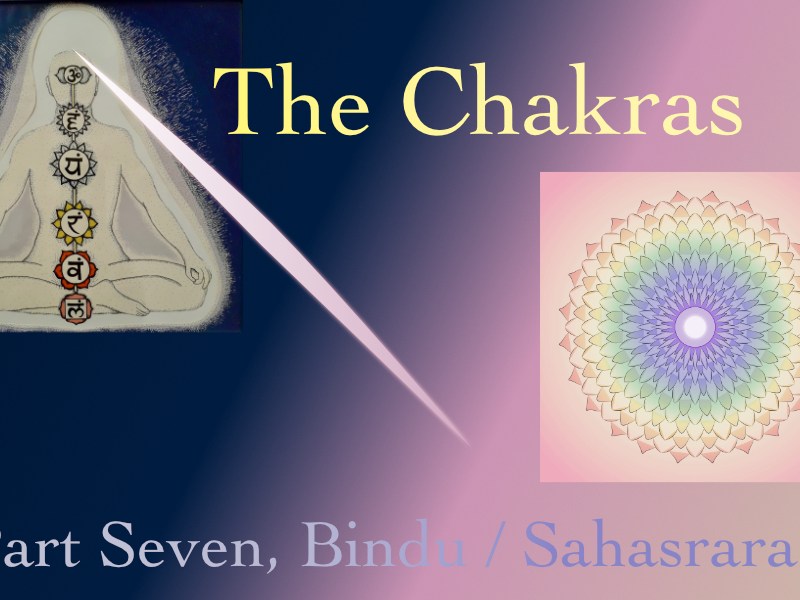
Bindu and Sahasrara
Recordings series compiled from a recent online course. This recording is an introduction and a guided reflection to Bindu and Sahasrara. The text books, especially those written by Swami Nishchalananda (see ‘Books’ in the header menu),…
Read the whole post
Agya Chakra
Recordings series compiled from a recent online course. This recording is an introduction and a guided reflection to Agya Chakra. The text books, especially those written by Swami Nishchalananda (see ‘Books’ in the header menu), give…
Read the whole post
Vishuddhi Chakra
Recordings series compiled from a recent online course. This recording is an introduction and a guided reflection to Vishuddhi Chakra. The text books, especially those written by Swami Nishchalananda (see ‘Books’ in the header menu), give…
Read the whole post
Anahata Chakra: part 2
When the mind is still then automatically the Heart is lucid. Thinking takes us away from the moment, thinking takes us into the past or future whereas the Heart brings you into the present moment. That…
Read the whole post
Anahata Chakra: part 1
Within the realm of Anahata chakra, ‘…there is this sense of being in the moment, and flowing with all the ups and downs of life, and this is Surrender.’
Read the whole post
Manipura Chakra
Recordings compiled from a recent online course, and including content from the archives; the Chakra course at Mandala Yoga ashram in 2002. This recording is an introduction and a guided reflection to Manipura Chakra. The text…
Read the whole post
Swadhishthana Chakra
Recordings compiled from a recent online course, and including content from the archives; the Chakra course at Mandala Yoga ashram in 2002. This recording is an introduction and a guided reflection to Swadhishthana Chakra. The text…
Read the whole post
Mooladhara Chakra
Recordings compiled from a recent online course, and including content from the archives; the Chakra course at Mandala Yoga ashram in 2002. This recording is an introduction and a guided reflection to Mooladhara Chakra. The text…
Read the whole post
A message from Swami Nishchalananda
Dear Friends,Despite these troubled times, I hope you are well. A year ago, I delivered a series of teachings and meditations on the Vigyana Bhairava Tantra, organised by Chitra Lekha in Sweden and recorded by Narada…
Read the whole post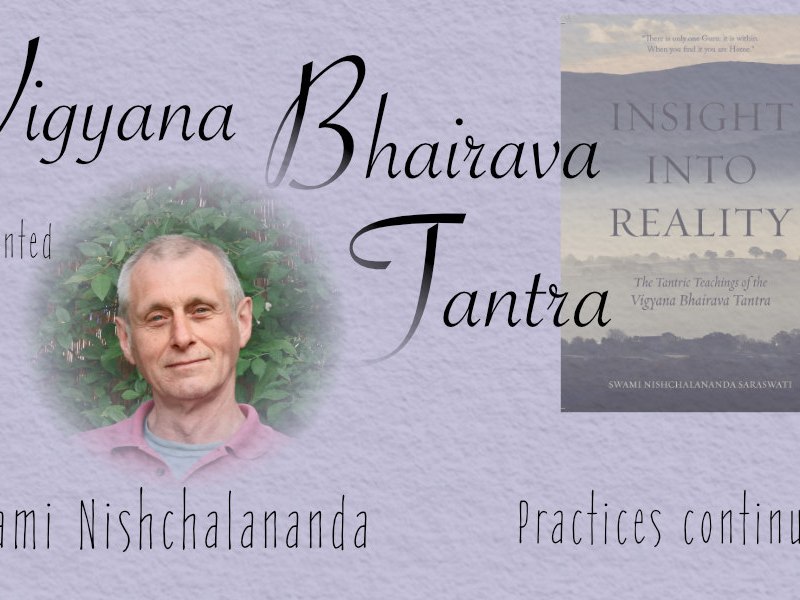
Vigyana Bhairava Tantra – continued
The next two sessions in the Vigyana Bhairava Tantra series are now live. Subscribers to the series can find them in the subscription section on the main menu or the link on the front page, or…
Read the whole post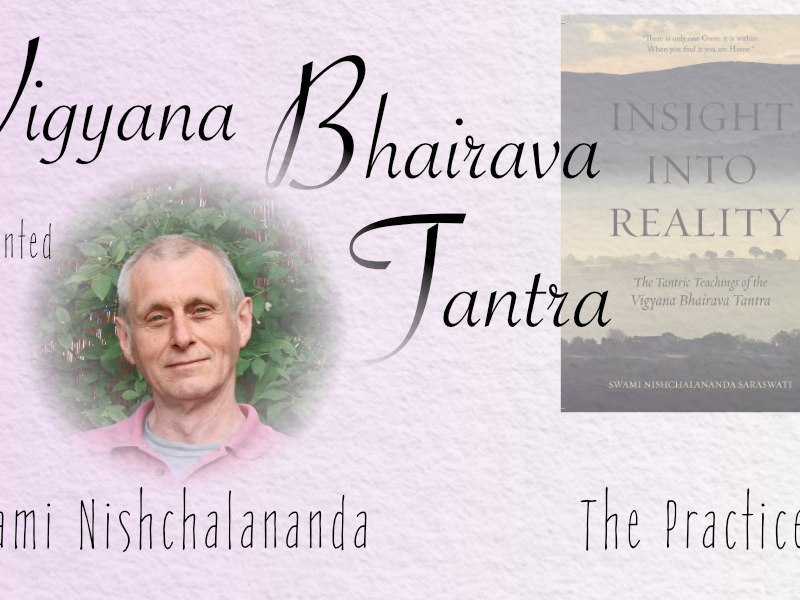
Vigyana Bhairava Tantra – The Practices
As the editor of this blog, I’ve gone through all the archived recordings of Swamiji’s teachings on the Vigyana Bhairava Tantra from around 20 years ago. In terms of audio clarity and the breadth of content,…
Read the whole post
Vigyana Bhairava Tantra – Introduction
A series of recordings on the Kashmir Shaivism text ‘Vigyana Bhairava Tantra’, taken from a series of talks and practical lessons given by Swami Nishchalananda from 2002 through to the present time. To start the series,…
Read the whole post
The Vigyana Bhairava Tantra in context.
A series of recordings taken from some of Swami Nishchalananda’s discourses on the Vigyana Bhairava Tantra, will be coming to the blog very soon. We decided it would be useful to explain a bit about how…
Read the whole post
A discussion around Kundalini Yoga, and Yoga Nidra
Sixth in the series of Question and Answer sessions, this one on the topics of ‘The practice of Kundalini Yoga’, ‘Requirements for teaching Yoga Nidra’, and asking Swamiji’s viewpoint on how to understand the state of…
Read the whole post
Introduction to Ashtanga Yoga (the Eightfold Path) and Yama and Niyama
The Yoga Sutras of Patanjali give eight steps on the path of exploring Yoga most deeply. The first two steps are often described as ‘rules of conduct’ for the practitioner.Another in the series of 2004 discourses…
Read the whole post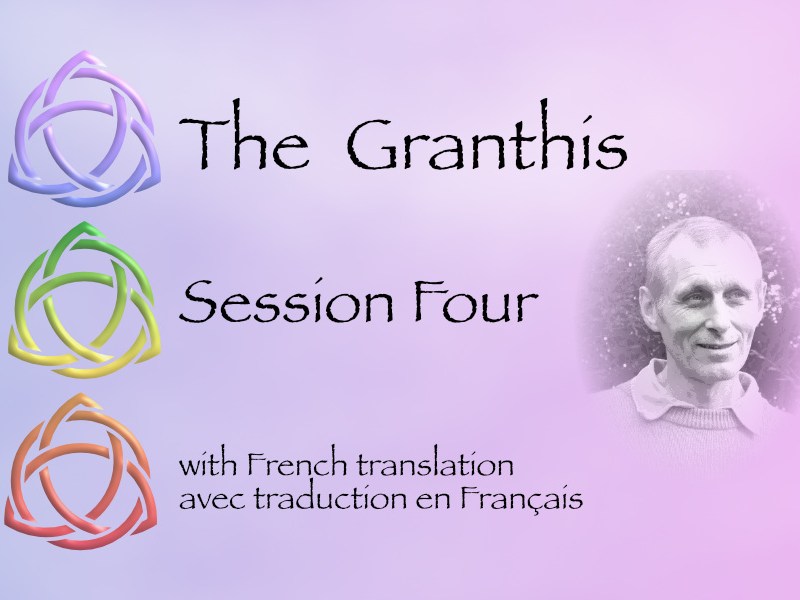
The Granthis, episode 4
The fourth and final episode in the series of talks and guided reflections, given by Swami Nishchalananda in 2002 in Paris, France, on the three Granthis, or ‘Knots’. They are a paradigm in classical Yoga; a…
Read the whole postSomething went wrong. Please refresh the page and/or try again.
 Swami Nishchalananda